
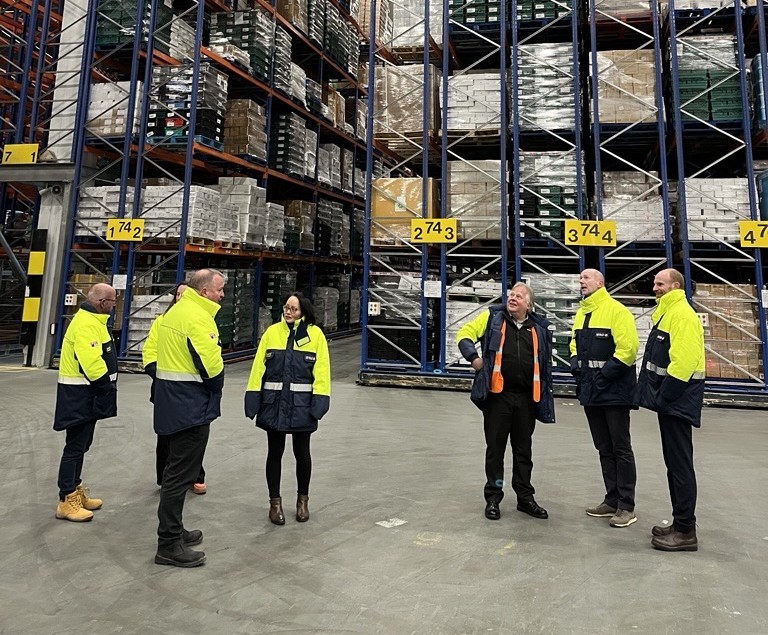
National Audit Office visits Magnavale Easton as part of UK food supply chain resilience study
The National Audit Office (NAO) visited Magnavale Easton in Grantham on Wednesday 29 April, as part of its value for money study, Resilience of the UK food supply chain to disruptions, with the visit facilitated by the Cold Chain Federation (CCF) to provide first-hand insight into how temperature-controlled logistics supports food security and national resilience. The NAO’s report will be published in autumn 2026.
The visit formed part of the NAO’s wider programme of work assessing how effectively the government is identifying, managing and preparing for risks that could disrupt the UK’s food supply. These risks include cyber-attacks, climate-related events, geopolitical instability, pandemics, energy disruption and wider infrastructure vulnerabilities.
As Parliament’s independent public spending watchdog, the NAO is examining whether the government has a clear understanding of food system risks, whether mitigation strategies are effective, and whether the UK is sufficiently prepared to respond to and recover from disruption. While food supply is recognised by the government as Critical National Infrastructure, the temperature-controlled logistics that underpin it are not formally recognised within this designation.
The visit to Magnavale Easton provided the NAO with direct insight into the scale and complexity of cold storage and distribution, and the essential role it plays in maintaining the integrity and continuity of the UK food supply. Magnavale Easton, the UK’s largest temperature-controlled storage facility, plays a significant role in supporting the storage and movement of food across the country. During the visit, the NAO team took part in a site tour led by the Magnavale team, and heard directly from representatives of the Cold Chain Federation, including Phil Pluck, Chief Executive, Tom Southall, Deputy Chief Executive, and Maddy Coupe, Policy Manager.
As part of these discussions, Tom Southall outlined the Cold Chain Federation’s forthcoming white paper, A Crucial Link: A Resilience Strategy for Protecting UK Food Supply Against Growing Threats to the Cold Chain, which will be published in June and sets out ten urgent steps for protecting citizen access to essential food.
“The role of cold storage and distribution in ensuring availability of critical food supplies to citizens is shockingly absent from government policies on food security and resilience, especially when it comes to responding to national crisis events such as conflicts and pandemics. Our White Paper aims to present to Government a sensible and realistic strategy for supporting the cold chain sector to continue to deliver for the nation under increasing threats”
Discussions also focused on the key risks facing the food supply chain, including both acute and long-term disruption scenarios, as well as approaches to resilience, contingency planning and response. The group also explored the role of government in strengthening food supply chain resilience and the importance of ensuring that all critical components of the system, including temperature-controlled logistics, are appropriately recognised within national infrastructure planning.
The Cold Chain Federation has been engaged with the NAO since January 2026, providing sector expertise to inform the study. The Federation was among the first organisations consulted, reflecting growing recognition of the importance of temperature-controlled logistics within the UK’s food system.
Reflecting on the visit, Phil Pluck, Chief Executive of the Cold Chain Federation, welcomed the opportunity to highlight the essential role the cold chain plays in food resilience.
“It is a pleasure to engage with a body as important as the National Audit Office and to see their detailed interest in the vital role that the cold chain plays in storing and distributing over 50% of the nation’s food.
The cold chain is the vital and critical link between food suppliers and food retailers. It is yet to be given Critical National Infrastructure status or even a clear ministerial portfolio.
To know that the NAO is investing time and expertise in understanding the role we play can only help raise the profile and role of the sector at a time of global instability.
We all share the common goal of creating a stable and robust food supply chain in the UK and to work alongside the NAO is a very positive step towards that aim.”
Amanda Cogan, Chief Operating Officer at Magnavale, spoke on the importance of recognition of the cold chain.
“This visit demonstrates our sector’s critical role in protecting national supply chains, showcasing the value of working collaboratively with the NAO to validate our operational standards, and highlighting why temperature-controlled warehousing and value added service facilities require CNI recognition to secure the infrastructure needed for continued service reliability”.
Commenting on the visit, a spokesperson from the National Audit Office highlighted the importance of seeing the sector first-hand.
“We really appreciate Magnavale and the Cold Chain Federation hosting us at Magnavale Easton. It was a fascinating visit and clearly highlighted the scale and importance of the cold chain to the food supply chain.”
The Cold Chain Federation will continue to engage with policymakers and key stakeholders to ensure the role of the cold chain is fully recognised within national resilience planning and as a vital component of the UK’s critical national infrastructure.
Comments are closed.